-
 This winter we've had record breaking warm weather. What does this mean for Isle Royale's wolves and moose, and how does it affect the census that tracks them?
 -
 Michigan Technological University's wolf-moose study is the longest running predator-prey study in the world. Surveying was suspended this year because of prolonged warm temperatures melting some of the ice pack on Isle Royale.
 -
 On today's show, we spoke about gun-related police encounters and heard about a recent school lockdown. Plus, a novelist discussed her book and we heard about Isle Royale updates.
 -
 Most of Isle Royale’s more than 130,000 acres is designated as wilderness, but the new plan focuses the few places on the island that are not.
 -
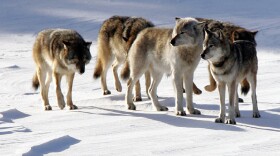 Just four years ago, only a single pair of inbred wolves remained on Isle Royale. That’s when the National Park Service began transplanting outside wolves to the isolated island. Now, Michigan Tech’s annual survey reports an estimated 28 wolves on the island as of this past February.
 -
 Isle Royale is the least visited of our national parks, but it's also one of the most revisited. The pandemic threw a curveball at the Lake Superior…
 -
 Today on Stateside, Governor Gretchen Whitmer has lifted the mask mandate for people who are fully vaccinated against COVID-19. Two political strategists…
 -
 Isle Royale National Park is reporting at least two new wolf pups have been born on the island.The park has so far transported 19 wolves to the island in…
 -
 Wolves on Isle Royale have begun to hunt and travel as a group. It’s part of a process park officials say could eventually lead to the formation of the…
 -
 Scientists say gray wolves relocated to Isle Royale National Park are adjusting nicely to their new surroundings and finding plenty of prey.Officials…

© 2024 MICHIGAN PUBLIC
91.7 Ann Arbor/Detroit 104.1 Grand Rapids
91.3 Port Huron 89.7 Lansing 91.1 Flint
Play Live Radio
Next Up:
0:00
0:00
Available On Air Stations


